

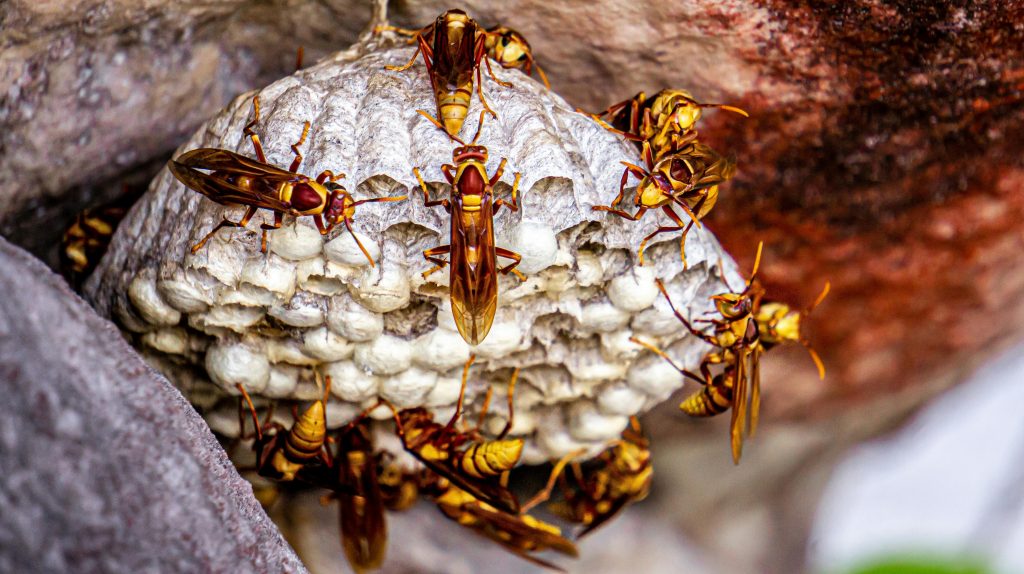
Wasp stings are something most people experience at least once in their lifetime. However, a common and very serious question that many homeowners ask is: how many wasp stings are dangerous? Learning the risks linked with wasp stings is important. This is because while a single sting may cause little discomfort, multiple stings or allergic reactions can quickly turn into a medical emergency. Therefore, at North Star Pest Control, we work to educate homeowners about these risks and help them stay safe.
How many wasp stings are dangerous? Understanding the real danger
To properly answer the question how many wasp stings are dangerous, it is important to consider different factors. This includes age, health issues, and allergic sensitivity. Moreover, for a healthy person, a few stings are usually not life threatening. However, when the number of stings increases greatly, the body has a hard time handling the venom. Furthermore, experts usually tell that around 10 stings per pound of body weight could actually be fatal. Although it is to be noted that serious complications may occur at much lower numbers.
This means that for children, old people, or those with weak immune systems, even a smaller number of stings can be very serious. Therefore, knowing about your personal risk level is important in deciding how your body might react.
How many wasp stings are dangerous for different people?
The answer to how many wasp stings are dangerous is not the same for everyone. Different people react differently to wasp venom. Moreover, the level of the reaction depends on several key factors. That is, some people are allergic to wasp stings, and even a single sting can cause a serious reaction known as anaphylaxis. Furthermore, this may include difficulty breathing, throat swelling, dizziness, and a sudden drop in blood pressure. In such cases, fast medical help is very important.
Alternatively, for people who are not allergic, the number of stings plays a big part in understanding the danger. When a person gets multiple stings, venom can stay up in the body and lead to toxic reactions. These reactions may bring symptoms such as nausea, headaches, fever, and in severe cases, damage to internal organs.
Additionally, the location of the sting also matters a lot. A sting near sensitive areas like the mouth, throat, or eyes can quickly become dangerous. This is because of swelling, which may block the airways or decrease vision. Also, age and overall health condition affect how the body reacts. Therefore, making children, old people, and those with health issues a more easy target to life threatening reactions.
What happens when you get stung by a wasp?
When a wasp stings, it injects venom into the skin through its stinger. This causes an instant reaction like pain, redness, and swelling. Moreover, this venom affects both the skin and immune system, and since wasps can sting multiple times, the danger of frequent exposure becomes higher. In most cases, people feel a sharp and burning sensation followed by some irritation or itching. However, in some cases, symptoms can become more serious. This includes the spread of swelling to other parts, breathing difficulty, nausea, or a rapid heartbeat. Furthermore, these signs mean that the reaction may be severe and should not be ignored.
If you spot increased wasp activity around your home, choosing expert wasp control in Vaughan is the best way to decrease risks and prevent dangerous encounters. Additionally, it is also important to know that hornets are a type of wasp but are usually larger and more aggressive. They have stronger venom and bigger nests, which makes them more dangerous in some situations. That is why trusting a reliable wasp and hornet removal company is important, as experts know how to safely handle both these insects and their nests without being attacked.
Conclusion: When should you get medical help?
Understanding when to get medical help after a wasp sting is very important. This is especially true when symptoms are more than mild discomfort. Moreover, quick care is needed if someone experiences signs of an allergic reaction such as difficulty breathing, swelling of the face or throat, or dizziness, as these can become life threatening very quickly. Furthermore, medical attention is also important if a person or pet is stung multiple times. Same is the case if the sting happens in sensitive areas like the mouth or throat where swelling can block airflow. Even if symptoms seem mild at first, increasing pain or swelling should always be taken seriously. At North Star Pest Control, we highly recommend staying safe and taking early action to stop wasp infestations, as experts will protect your home and decrease dangerous encounters.
Frequently asked questions
- How many wasp stings are dangerous for a normal healthy adult?
For most healthy adults, a few stings are well managed. However, multiple stings again and again can be dangerous and life threatening since they might cause allergic reactions.
- Can a single wasp sting also be life threatening?
Yes, in some people like children, older individuals, or people with weak immune systems, even a single wasp sting can turn out extremely dangerous.
- What can I do at home immediately after a wasp sting?
In case of a wasp sting, start by cleaning the area properly with a disinfectant, then apply a cold compress and keep a check on the symptoms to get medical help in case it gets bad.