

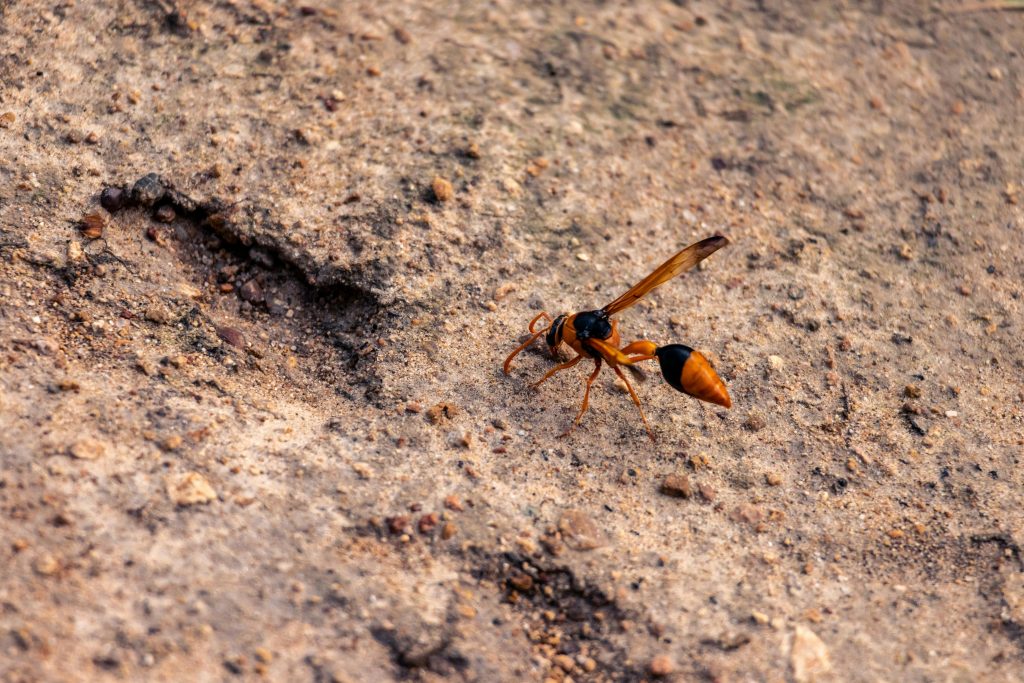
A mud wasp nest is a structure made by a specific wasp species using mud. Moreover, it is commonly seen around homes during warmer months when activity increases. These nests usually show up on walls, roofs, sheds, and inside empty areas, forming small tube like or clustered shapes. Although mud wasps are usually less aggressive than other species, a mud wasp nest can still be a cause of concern due to possible stings and frequent nesting in the same area. Therefore, understanding a mud wasp nest, how it looks, where it forms, and why it shows up is important for having a safe living space.
What is a mud wasp nest and why does it form?
A mud wasp nest is made by a type of wasps using mud as their main building material. Moreover, these nests are usually small, tube like, or clustered formations that are fixed to hard surfaces such as walls. Mud wasps, also known as mud daubers, make these nests to lay their eggs and store food for their larvae.
Furthermore, unlike social wasps that live in large colonies, mud wasps like to live alone. Each female forms her own nest and brings into it insects or spiders as food for her larvae. This behavior makes them less aggressive, but it does not mean they are not harmless. In such cases, getting expert wasp removal Bradford is necessary for safe handling of the nest.
Additionally, mud wasps are attracted to areas where mud, water, and their prey are easily available. Therefore, if your property has damp soil, standing water sources, or a lot of insects, it becomes a perfect environment for these wasps to grow.
Warning signs of a mud wasp infestation
Locating the presence of a mud wasp early can help avoid a larger problem. Here are some early signs to look out for:
- Tiny mud tubes or clusters attached to walls or roofs
- Increase in wasp activity around your home
- Wasps carrying mud or insects to a certain location
- Nests showing up in hidden and quiet areas
These nests may look harmless at first, but ignoring them will lead to frequent nesting in the same area over time. To effectively deal with such conditions, wasp control in Brampton can offer expert solutions to decrease nesting and limit activity.
Are mud wasp nests dangerous?
Mud wasps are not usually very aggressive or sting unless they feel danger. However, their nests can still be a risk in most cases:
Allergic reactions
Even a single sting can cause serious allergic reactions in people who have weak immune systems, like children or elderly. Therefore, making it important to manage any wasp activity around your home quickly.
Structural issues
Frequent nest building can damage and stain the walls and ceilings. Therefore, over time, mud deposits can erode surfaces, especially in indoor areas.
Increase in wasp activity
While mud wasps like to stay alone, the presence of one nest can bring in more wasps to the same area, leading to multiple nests forming over time.
Fear and feeling discomfort
For many people, the presence of wasps brings stress and limits their use of outdoor spaces like decks and gardens.
Conclusion: Protect your home from mud wasp nests
A mud wasp nest can look harmless at first. However, knowing the differences between mud wasps and other species helps in understanding the real risk and choosing the right plan for removal. Moreover, while mud wasps are usually less aggressive than yellow jackets and paper wasps, their nests can still cause safety issues, frequent infestations, and structural damage. Therefore, safe removal needs proper check, protective plans, and complete control to prevent stings. Furthermore, preventive tips such as closing entry points, decreasing moisture, and removing old nests can greatly lower the risks of future nesting.
Additionally, although DIY plans may look easy, they do not offer complete removal, making experts like North Star Pest Control take over. As a leading pest control company in the area, we offer complete and effective removal of all types of wasps. This is to ensure that you get to live in a healthy and safe environment at all times.
FAQs: Things you need to know
- Are mud wasp nests dangerous?
Mud wasp nests are usually low risk, however they can still cause stings and allergic reactions if not treated on time.
- Can I remove a mud wasp nest by myself?
Yes, but it is very dangerous and may lead to stings if not completely removed. This is why we always recommend to call in the experts.
- How can I prevent mud wasps from returning to my property?
In order to stop the entry of wasps into your property, close all entry points, decrease moisture, avoid storing water in open areas, and clear old nests to prevent future nesting.